


QJ13 Micro Weather Station, Integrated Design, IP67 Waterproof and Dustproof
Other Products


As a core device in modern meteorological monitoring, the integrated micro weather station is gradually becoming an important data source for smart cities, agriculture, transportation, environmental protection, and other fields. It can collect six key meteorological parameters in real-time, including temperature, humidity, atmospheric pressure, wind speed, wind direction, and precipitation, providing precise support for weather forecasting, disaster warnings, and industry decision-making. With the development of IoT and artificial intelligence technologies, the application scenarios of such sensors continue to expand, and their technological evolution and market prospects are attracting significant attention.
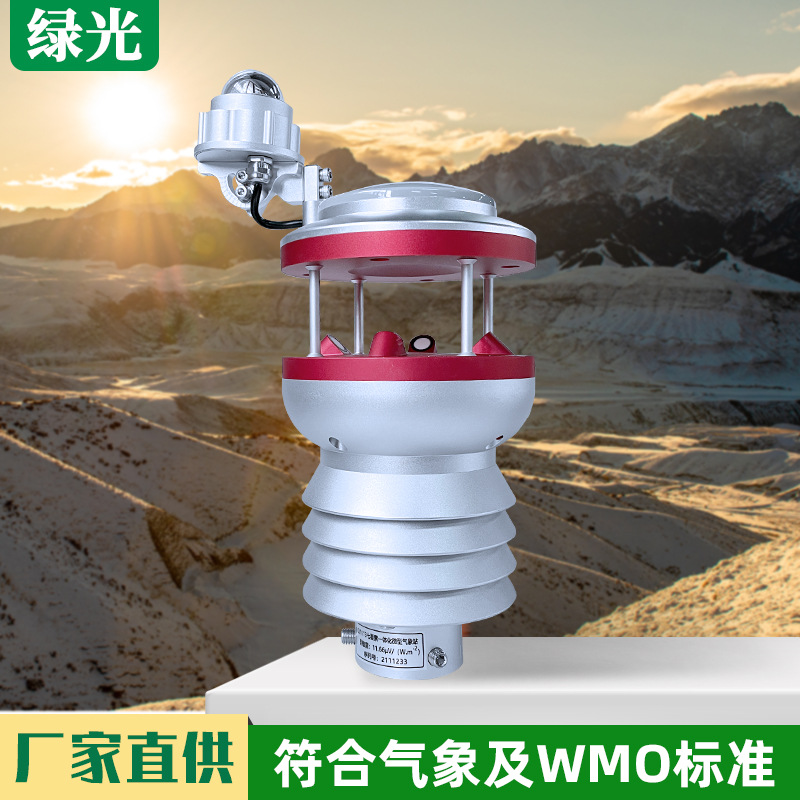
The Dongguan Lvguang [Model QJ13] integrated micro weather station is a highly intelligent IoT-integrated device developed by Dongguan Lvguang New Energy Technology Co., Ltd., featuring mid-to-high-end technological standards in the industry.
Product Features
High Precision and High Reliability: The sensors achieve high-precision measurements with strong reliability, meeting international technological standards and filling domestic gaps.
IoT-Integrated Intelligent Design: Equipped with integrated IoT modules, it supports remote data communication and real-time monitoring, facilitating intelligent management.
Miniaturization and High Integration: Compact in size and easy to install, it can be flexibly deployed in various facilities without complex operations.
Maintenance-Free and Strong Anti-Interference Capability: Designed without moving parts (e.g., ultrasonic technology), it avoids wear and tear, adapts to harsh environments such as rain, snow, and strong winds, and requires no on-site calibration.
Low Power Consumption and Stable Operation: With low power consumption, it supports solar or grid power supply, ensuring 24/7 continuous operation. It features a high protection rating (e.g., IP67) and anti-corrosion materials to extend its service life.
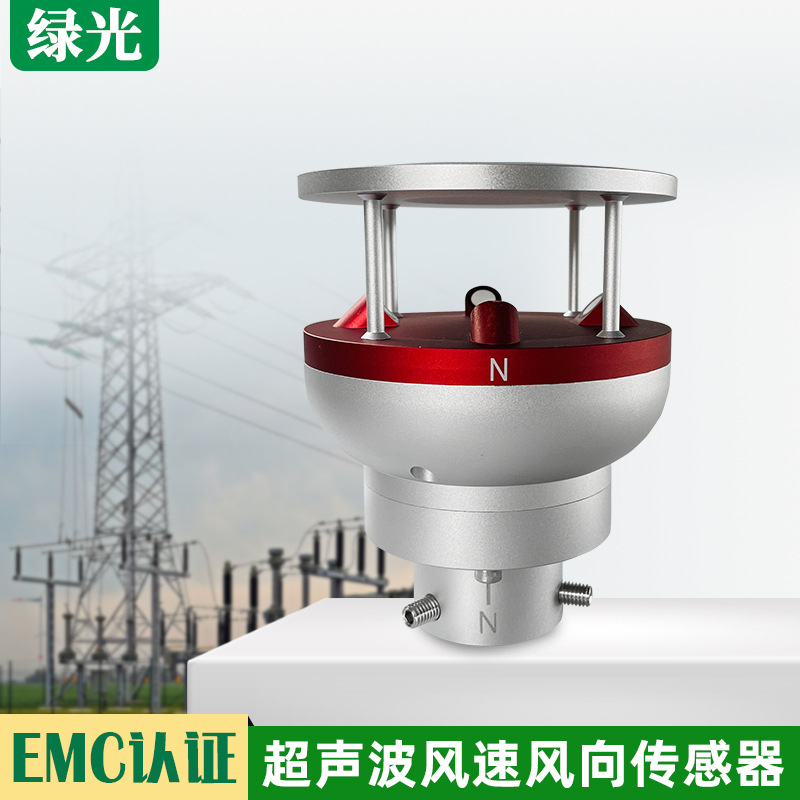
Meteorological Monitoring and Forecasting: Provides accurate data for weather stations, supporting weather forecasting and climate research.
Smart Environmental Protection and Urban Management: Monitors urban air quality and microclimate changes, assisting in pollution control and urban planning.
Agricultural Optimization: Monitors real-time parameters such as temperature, humidity, and light in farmland, optimizing irrigation and planting strategies to increase crop yields.
Smart Grid and New Energy: Applied in the power industry to support grid dispatch and meteorological data needs for renewable energy generation.
Water Conservancy and Disaster Warning: Integrated into hydrological monitoring systems, providing data support for early warnings of floods, typhoons, and other disasters.
Technical Principles and Core Functions
The design of the integrated micro weather station combines multidisciplinary technologies. Temperature monitoring typically uses platinum resistance or semiconductor components, humidity detection is often based on capacitive polymer films, atmospheric pressure is measured using silicon piezoresistive or capacitive sensing elements, while wind speed and direction are measured using ultrasonic or mechanical anemometer structures. Precipitation monitoring employs optical or tipping bucket rain gauges. For example, ultrasonic wind speed and direction sensors calculate the time difference of sound wave propagation in the air to derive wind speed and direction, avoiding wear and tear of mechanical parts. Such sensors generally feature an IP65 or higher protection rating and can operate stably in extreme environments ranging from -40°C to 70°C. Some high-end models even integrate data filtering and self-calibration algorithms to ensure data continuity.
It is worth noting that modern sensors are moving toward miniaturization and low power consumption. MEMS (Micro-Electro-Mechanical Systems) atmospheric pressure sensors measure only 3mm×3mm, consume less than 1mA of power, and achieve an accuracy of ±0.1 hPa. Such technological advancements enable sensors to be embedded in mobile platforms like drones and wearable devices. Additionally, the widespread adoption of low-power wide-area network technologies such as LoRa and NB-IoT allows sensor data to be transmitted remotely over kilometers, greatly expanding the coverage of monitoring networks.
In the field of smart agriculture, six-element sensors have become the "nerve endings" of precision agriculture. Through monitoring nodes deployed in fields, farmers can obtain real-time microclimate data of crop growth environments. Combined with soil moisture sensors, the system can automatically trigger irrigation or ventilation equipment. For example, a grape plantation in Jiangsu reduced frost warning response time to 15 minutes by deploying a meteorological sensor network, saving approximately 300,000 yuan annually.
In urban governance, such sensors also play a key role. The "Meteorological Sensing IoT" established in Beijing's Chaoyang District, with over 600 six-element sensors installed on streetlights and rooftops, enables minute-level warnings for urban heat island effects and rainstorm waterlogging. During a sudden heavy rainfall in the summer of 2024, the system predicted the risk of water accumulation in low-lying areas 40 minutes in advance, providing valuable time for traffic management.
In the renewable energy industry, the siting and operation of wind farms heavily rely on meteorological data. A wind farm in Inner Mongolia deployed an array of meteorological sensors between turbines. By analyzing wind speed profiles and turbulence intensity, it optimized turbine spacing and yaw strategies, increasing annual power generation by 12%. Similar technology is also used for dust accumulation warnings in photovoltaic power stations. By correlating humidity, wind speed, and power generation efficiency data, cleaning operations can be intelligently scheduled.
The industry still faces several technological bottlenecks. For example, traditional tipping bucket rain gauges are prone to measurement errors during heavy rainfall, while optical sensors, though accurate, suffer from lens contamination. A research team developed a microwave resonance rain sensor that measures precipitation by analyzing changes in the dielectric constant of water droplets. Preliminary experiments showed an error rate of less than 3% under light rain conditions, but mass production costs仍需优化. Additionally, multi-sensor data fusion algorithms and anti-electromagnetic interference designs are current research priorities.
Future Development Trends
The integration of edge computing and AI will reshape meteorological sensing models. New sensors are beginning to integrate lightweight AI frameworks like TensorFlow Lite, enabling local data quality control and trend prediction. A Shenzhen-based company's "Weather Sentinel" device can identify thundercloud development characteristics at the edge, reducing warning delays from the traditional 20 minutes to less than 5 minutes.
Breakthroughs in materials science are also driving innovation. Graphene humidity sensors have reduced response times to 0.5 seconds, 10 times faster than traditional products. Quantum dot spectroscopy technology enables a single device to simultaneously monitor environmental parameters such as PM2.5 and ultraviolet radiation. Notably, the latest photon crystal atmospheric pressure sensor research by the U.S. NIST could theoretically improve accuracy to 0.001 hPa, potentially redefining industry standards.
Standardization efforts are also advancing. The "Technical Specifications for Intelligent Meteorological Sensors" released by the China Meteorological Administration in 2024 for the first time明确 the IoT interface protocols and data encryption requirements for six-element sensors. This will accelerate the industry's transition from single-point monitoring to cloud-edge collaboration. According to机构预测, the global market for intelligent meteorological sensors will exceed $5 billion by 2028, with the Asia-Pacific region expected to see an annual compound growth rate of 18.7% driven by smart city initiatives and carbon neutrality policies.
From disaster prevention and mitigation to production optimization, integrated micro weather stations are building the "meteorological neural network" of the digital age. As technology continues to iterate and application scenarios deepen, these devices will evolve from professional tools into standard components of urban and industrial infrastructure. The data streams they generate will deeply integrate with geographic information and industry big data, ultimately forming a global real-time environmental sensing system. This process relies not only on hardware innovation but also on interdisciplinary collaboration and breakthroughs in business models. Its development trajectory will profoundly impact humanity's strategic布局 in addressing climate change.
| Industry Category | Instruments & Meters/Analytical Instruments/pH Meters |
|---|---|
| Product Category | |
| Brand: | 东莞绿光 |
| Spec: | QJ13 |
| Stock: | 500 |
| Manufacturer: | 东莞绿光 |
| Origin: | 114419 |


